For six years he has flayed the Nazi dragon. Now he has begun to slay it. This man, worth an army corps in American estimation, is appraised by his predecessor, the Rt. Hon. Duff Cooper, M.P.
WINSTON CHURCHILL is today the most vigorous and colourful personality in English political life. His career has been vivid, restless and romantic. He has never ceased from mental fight nor has his sword ever slept in his hand.
He has fought many engagements, both in the military and in the political arena. He has risked his life and seen men die in battle in four continents. He has held almost all the highest offices of state, and he has been a hunted fugitive with a price upon his head.
The fact that during the last ten momentous years such a man with such a record should not have been allowed to play any part in the control of his country’s destinies is one of the many remarkable features of those last ten years that will puzzle and confound the historian.
NOW, when it is too late to prevent the disaster which he so accurately foretold, he has been called upon to share in meeting it, and without making complaint, criticism of conditions he has buckled to the task.
What are the qualities that have formed the character and marked the career of this remarkable man?
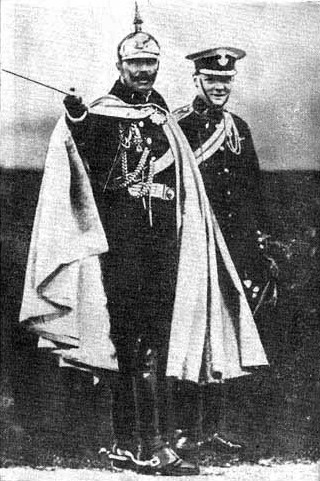
The first quality is courage - a quality that has never failed or deserted him. When as a new boy at Harrow he pushed one of the strongest and most important of the older boys - who afterwards proved to be Leo Amery - into the water, when as a subaltern he succeeded in getting leave to pay a visit to Cuba, that being the only place in the world where in 1895 a war was in progress, when he fought on the North-West frontier, when he charged with the 21st Lancers at Omdurman, when he escaped from prison in South Africa, when as an ex-Cabinet minister he fought on the Western Front - whenever and wherever physical courage has been called upon he has proved that his supplies of it are inexhaustible.
But of the two species of courage that a man can command there can be little doubt that what it is called the moral variety is the more uncommon, and of this also Winston Churchill has never shown any deficiency. It took no small degree of that kind of courage for a young man who had just succeeded in winning a seat for the Conservative cause, who had been brought up in a strongly Conservative atmosphere, whose father had been a brilliant Conservative statesman and whose early imbibed prejudices had been reinforced by service in a cavalry regiment, to sever himself completely from the party to which his family and most of his friends adhered. Those were days when party feeling ran higher than it does to-day and when to be both a Liberal and a renegade meant exclusion from many houses and breaches with many friends.
MORAL courage was required again many years afterwards, his quarrel with the Conservative Party having been healed in the interval and he himself having served as a Conservative Chancellor of the Exchequer.
Then when the party was in opposition but seemed certain to be restored to power in the near future he chose upon a question of principle to sever his connection with the party leaders, thus foregoing his future claims to office.
It was in many ways a disastrous decision, but courage was required to take it, and courage was required when at the time of the Abdication he took a line which nobody supported and faced alone the disapproval of the entire House of Commons.
Only less important than courage as a weapon in the battle of his life is the quality of energy, and of this quality also Winston Churchill possesses an unlimited supply. When somebody once observed to Sheridan that there was no greater pleasure than lying under a tree with a book, he answered “Why with a book?” No such query could occur to Winston Churchill.
THE art of idleness is one of the few arts that he has never deigned to study. Pleasure for him has always meant another form, never a cessation, of activity. Whether it were playing polo, novel writing or brick laying, he would throw his whole heart into the occupation of the moment and devote to it all his vigour and enthusiasm. For that reason he is never dull in himself and for the same reason he is the best company in the world because his enthusiasm is infectious and lends temporary, reflected inspiration to those around him.
The third great quality which Winston Churchill possesses and which more than either of the other two distinguishes him from the majority of politicians is the gift of imagination. It is this gift which enables him not only to better than any of his contemporaries and to write better than most of them, but also to think constructively, and also on most occasions to see in their true perspective the realities of a political situation.
IMAGINATION, for which genius is only another name, is a rare gift and a dangerous one. It is not common among Englishmen and for this reason Englishmen usually regard it with suspicion. Only now after close upon half a century in their service is Winston Churchill beginning to receive the respect which is his due. And if the catastrophe against which he so repeatedly warned them had not occurred it is probable that that respect would still have been withheld.
The manner in which England has treated men of genius in politics reflects little credit on our people. Burke never held office, nor did Sheridan. Fox as a dying man was Foreign Secretary for less than nine months, Canning was Prime Minister for four, and the fire of Disraeli was almost burnt out before, in old age, he attained premiership.
Disraeli shared with Winston Churchill another quality which Englishmen profoundly distrust. He excelled in more directions than one. He was versatile. If a man both writes novels and history and also makes political speeches he is regarded in this country as a dilettante and an amateur. Both his literary and political reputations suffer.
The highbrows of Bloomsbury look down with contempt on any member of the House of Commons, while the voter in the constituency hears with consternation that his member aspires to be also that unreliable and hardly respectable character - “a literary gent.”
If the offender is also guilty of writing verse, as was the case with Disraeli, or of painting pictures, as is the case with Winston Churchill, the indictment against him becomes increasingly grave. A trifler, a dabbler, a jack-of-all-trades are the most civil appellations he is likely to incur.
WINSTON CHURCHILL is certainly one of the best writers of English alive, but the first editions of his books command no price in the market while those of many a second rate novelist have soared in value.
On the other hand, he has frequently been urged by the anonymous writers of leading political articles that he would be well advised to devote all his energies to literary production and to leave politics alone. As for his painting, it has, so far as I am aware, received no attention at all in artistic circles.
The fact of the matter is that English people have a mortal fear of anything that is unusual or out of the ordinary. They prefer to pin their faith to the mediocre, the common-place and the middle class. In quiet times it may well be that the English are wise so to limit their choice of leaders. Where there is genius there may be danger, but where there is certainly danger genius is required to meet and defeat it.
Possessing courage, however, as well as imagination, Winston Churchill has been careless, perhaps too careless, of the opinion of his contemporaries.
BECAUSE he has not always worked for the same Party, some people have failed to recognise the consistency of his career. It is not always the man who changes his Party who changes his mind. Parties themselves are guilty of the most glaring inconsistencies.
I have seen the staunchest members of the Tory Party vociferously cheering the extreme pacifism of Mr. Lansbury because it happened to coincide with the policy called “appeasement,” which, for a short time they supported, but subsequently forsook. I have seen members of the same party congratulating the Prime Minister one day on refusing to introduce conscription because they thought he had no intention of doing so and voting in support of him on the following day when he introduced it.
Those who silently vote as they are told to by the Whips are guilty of far greater inconsistencies than the man who has the courage and the imagination persistently to follow one line of his own, even though it may take him from time to time from one side of the House of Commons to another. On all the great issues of the age, Winston Churchill has shown himself consistent.
In questions of social reform, which so much occupied the times of peace, he was always on favour of long strides in the direction of rapidly improving the conditions of the people. As a Home Secretary, he is still remembered by the unhappy denizens of His Majesty’s prisons as the man who did most to humanise and make bearable their hard fate.
As a believer in Home Rule for Ireland, he was able to conclude the Treaty that set up the Free State without stultifying all his previous utterances on the subject - a condition which did not apply to Sir Austen Chamberlain nor to Lord Birkenhead, who are usually considered more consistent politicians than he. But above all he has never wavered in his determination to see Great Britain powerful and his refusal to acquiesce in any lowering of her prestige.
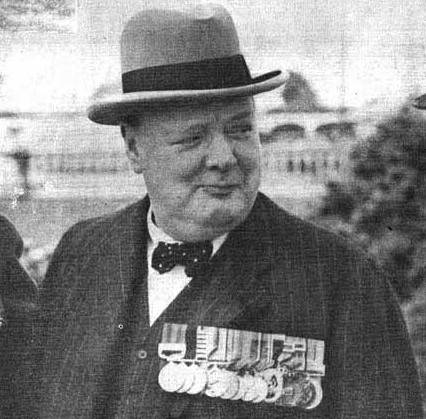
BEFORE he entered Parliament he fought for her on the field, ever since he has fought for her in the House of Commons. The services which he rendered at the Admiralty during the fateful years before 1914 should alone have entitled him to the lasting esteem of his fellow countrymen. More clearly than many members of that Liberal Cabinet, he saw the danger which was coming and with determination he prepared to meet it so that when the blow fell the Fleet was ready. There was much uncertainty and much division amongst his colleagues. There was a weak party in favour of peace and capitulation. He, however, never wavered and his views prevailed.
EQUALLY it is certain that if the attack on the Dardanelles had proved successful it would have shortened the war by at least two years and saved millions of lives. The simplest strategic move is to turn the flank of the enemy when you cannot break his front, and the capture of the Dardanelles seemed the simplest method of turning the flank of the Central Powers. Nor is there now any doubt from a purely naval and military point of view that it was an operation that could have succeeded.
Unfortunately, neither his own First Sea Lord, Lord Fisher, nor the Secretary of State for War, Lord Kitchener, ever really believed in it. It was only his own eloquence, powers of exposition and argument, his own persistence and determination that produced their half-hearted acceptance of the scheme. It may be argued that, realising how half-hearted that acceptance was, he would have been wiser to drop it altogether. But when a man has seen which road will lead to victory and has persuaded his companions reluctantly to come along with him down that road, we cannot blame him if he persists in the same direction in the hope that he will be able, by pulling and pushing, by bullying and cajoling, to keep them with him till the end.
FROM 1924 to 1929 he was Chancellor of the Exchequer. It is usual for the Chancellor of the Exchequer to succeed his chief as Leader of the Party and Prime Minister. Ten years ago therefore it seemed probable that in the natural course of events Winston Churchill would assume such a position in the near future. Had he done so, or had he even remained in a secondary but powerful position, the course of history would have been altered.
During those ten years he has at no period failed to estimate accurately the full meaning of the German menace. He has advocated consistently rapid rearmament and the forming of close understandings with those powers which were threatened by and were willing to resist German aggression. His warnings fell upon deaf ears, but if they had been acted upon in time they would have made the war impossible because Germany would never have been strong enough to have dared to launch it.
IN the few weeks since this war began every word he has spoken has increased the position which he holds in the eyes of the people. His first speech as a Minister and his first broadcast to the nation came as a tonic to tired nerves and anxious hearts. Throughout the country men and women in their millions heaved a deep sigh of relief and felt that they at last had heard the authentic voice of England.